AI showrunner · animation engine · built on Godot
You run the show.
Reelwright makes the cartoon.
Tell it the show you want. It designs the world, the cast and the sets, then writes, directs and renders episodes. At every step you approve, tweak, lock or regenerate anything, from a whole theme down to a single keyframe.
In development: milestones 0–2 of 10 are done, and the showrunner (M3) is being built now.
“The Lighthouse”, a cold open
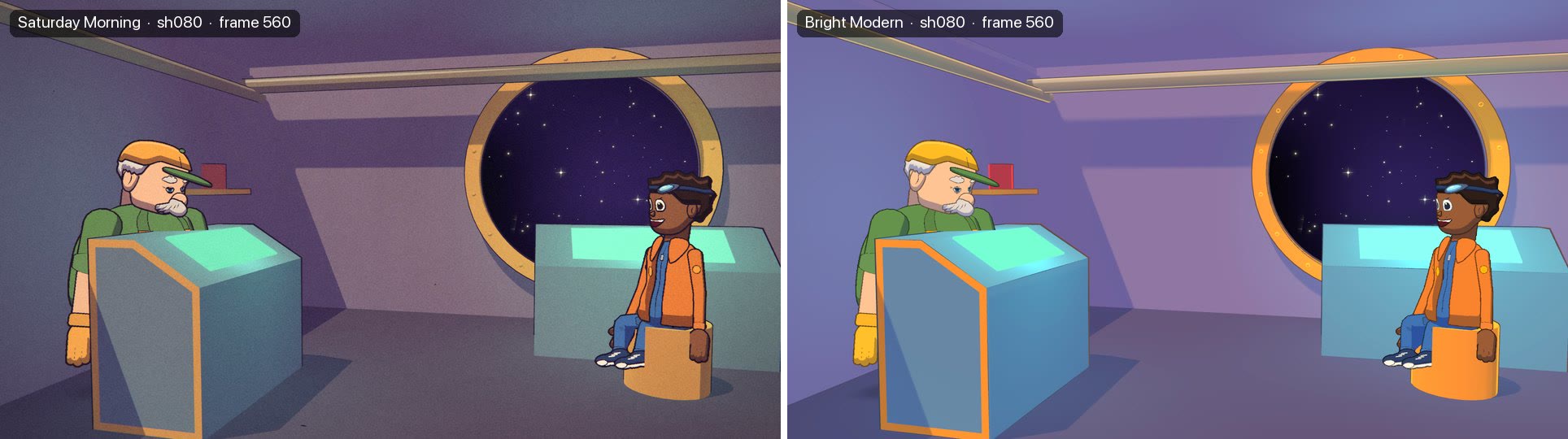
28 seconds from Marigold Salvage Co., the example show. Eight shots, two characters, lip sync and sound effects, all compiled from a screenplay and an episode spec to a frame-exact timeline. Nothing was keyframed by hand.
- Voices Kokoro, local
- Lip sync Rhubarb
- Mix −16 LUFS
- Output H.264, BT.709, captions
The AI never draws.
It writes small, versioned specs you can read, edit and diff. Deterministic Godot systems build the assets and perform the episodes, so the same specs and seeds always give the same show, frame for frame.
-
1
Propose
The showrunner answers in change sets: a theme, a style, a crew, a set, each with previews. Nothing lands until you approve it, and anything can be undone.
-
2
Specify
Every character, set, style and shot is JSON validated against a schema. Specs are hashed, locked field by field, and tracked in git like code.
-
3
Build & render
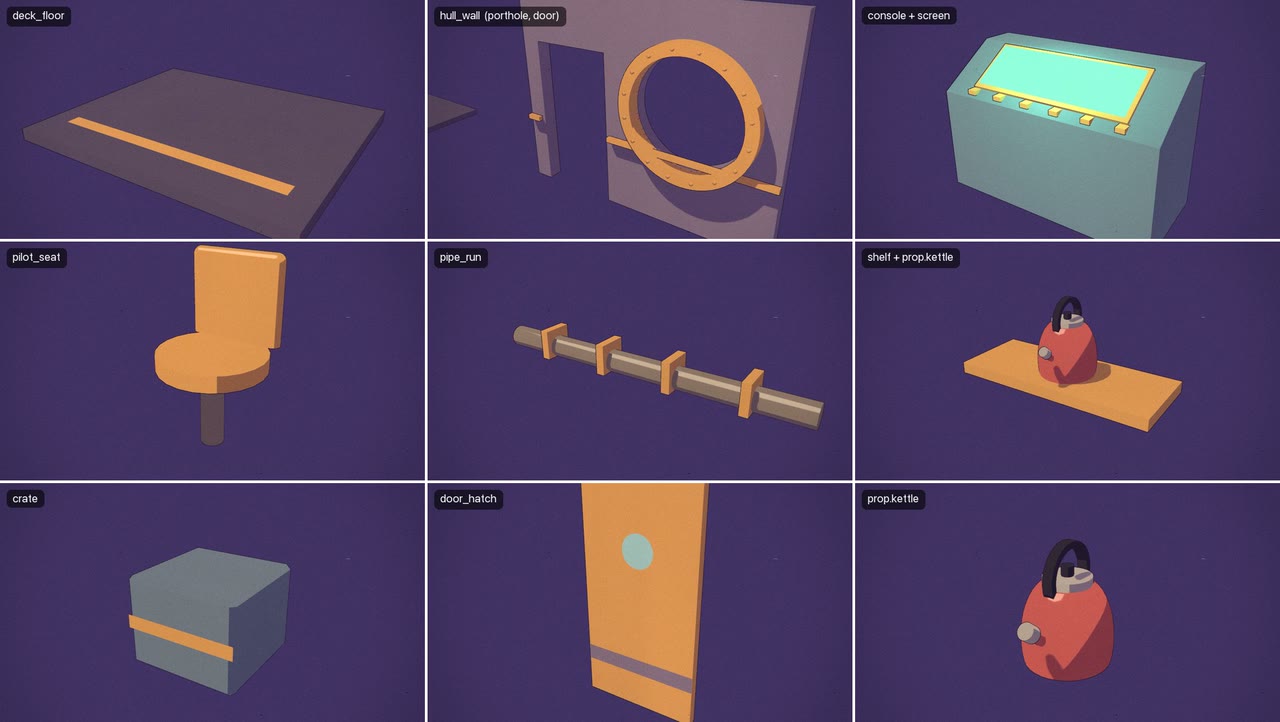
Godot turns specs into rigs, sets and golden-exact frames. CI re-renders the demo on every push and compares nine frames to the pixel.
"id": "char.otto",
"name": "Ottoline Brisk",
"body": {
  "heightCm": 162,
  "headsTall": 4.2,
  "build": "slim",
  "silhouette": "triangle"
},
"head": {
  "hair": {
    "style": "short_messy",
    "fringe": "spiky",
    "color": "@hair"
  }
},
"persona": {
  "role": "Pilot of the Marigold",
  "flaw": "Sees an adventure in
    every warning sign."
}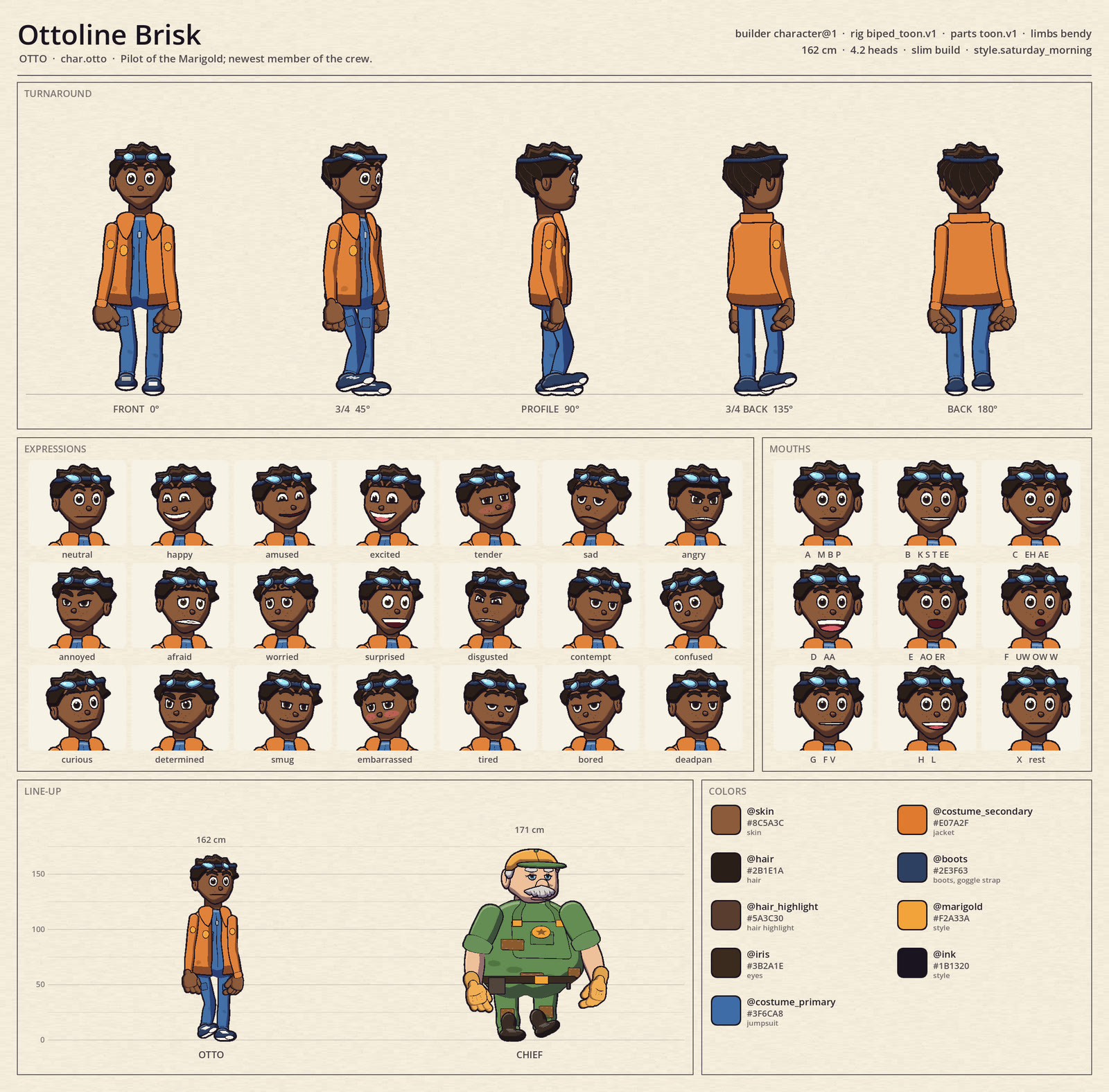
Generated, then approved.
Patterns describe a kind of character or set. Seeded samplers draw from them, and ensemble rules keep a cast readable at a glance: distinct silhouettes, colors, heights and hair.
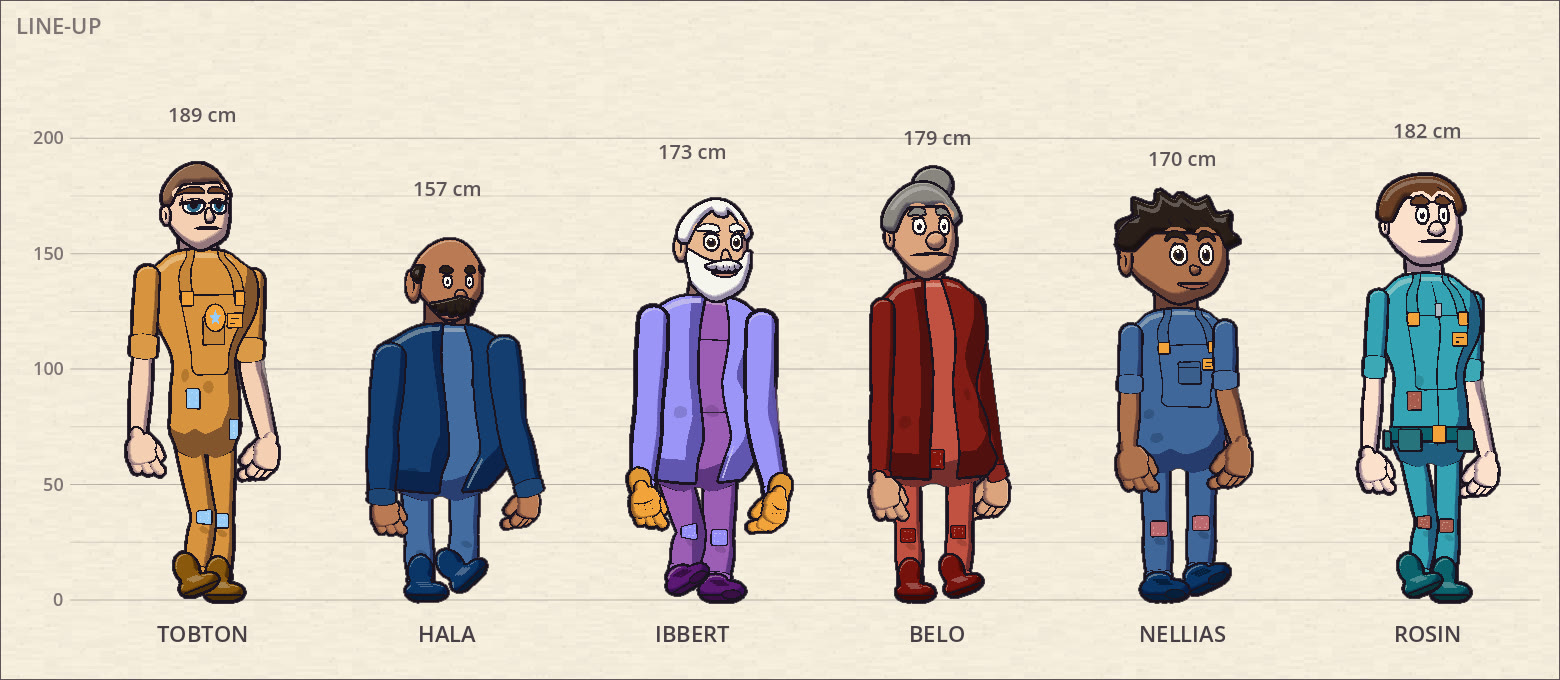
reelwright generate characters --count 6: a crew drawn from one pattern, each with a full model sheet.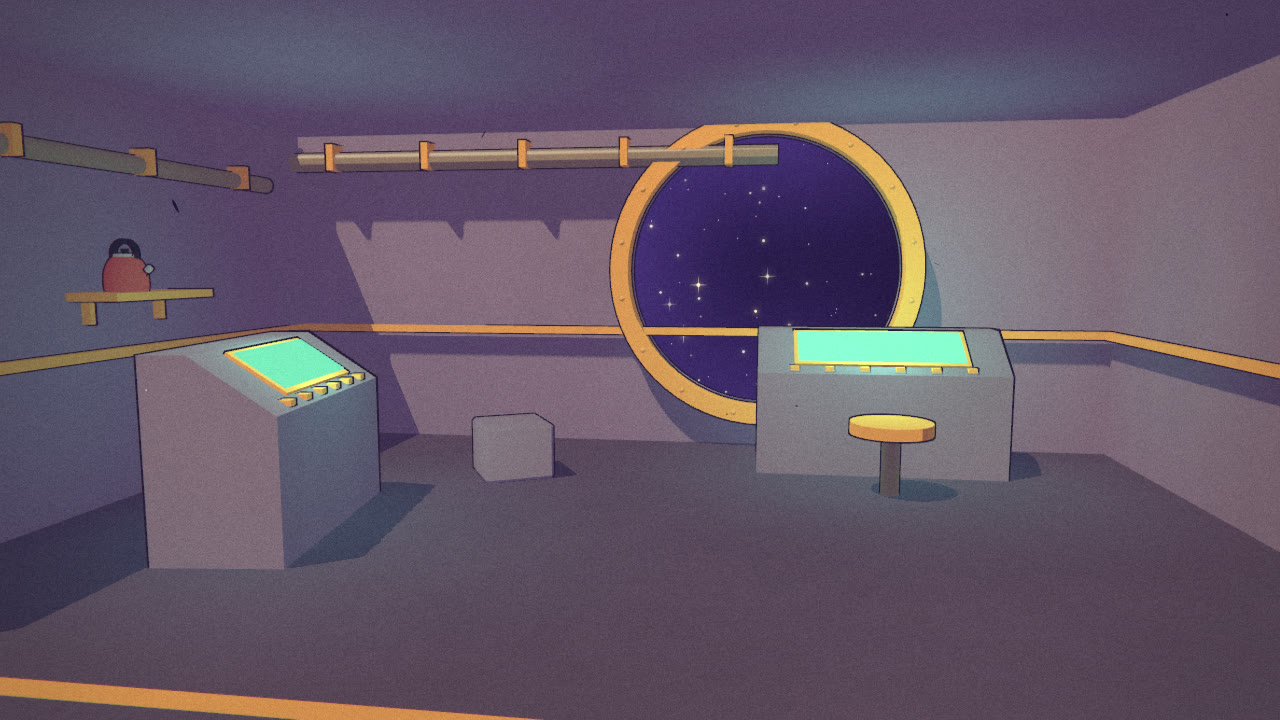
Coming in M3
Talk to it.
“Create a new show: a comedic starship crew, Saturday-morning style.” You get back a theme, a style, a crew of four and a bridge, each as a proposal with previews. Ask for four options, pick one, lock what you love, undo what you don't.
Use it from Claude Code through an MCP server, or from Reelwright Studio, a standalone app with chat, diffs and previews. The same components also dock inside the Godot editor.
Roadmap
- M0 Foundations: schemas, determinism, toolchain, CI
- M1 A 30-second scene rendered end to end, with no AI
- M2 Parametric generation of casts, sets and styles
- M3 Showrunner for world-building: MCP, chat, Studio
- M4 Director AI: screenplay to directed, voiced video
- M5 Writers' room: one prompt to a full episode
- M6 Performance: emotion, gesture, idle life
- M7 Re-direction on a timeline, by chat or by hand
- M8 Restyle a whole show, with canon-drift reports
- M9 Generative adapters for art, 3D, music and SFX
- M10 Continuity, 3D characters, render farm
House rules
- Original work only. No borrowed characters or logos, and no studio named as a style target.
- You hold the pen. The AI proposes and you decide. Locks are respected, and history is never rewritten.
- Local first. Voices, lip sync and rendering run on your machine. Paid models are optional, with spend caps.
- Reproducible. Seeds are derived by name, specs are hashed, and golden frames are checked in CI.